

Kitchen cabinets are one of the largest investments in any home, and choosing between European and American styles is a question that comes up constantly in North Scottsdale. The short answer is yes, they are genuinely different, and the differences go well beyond appearance. European cabinets are frameless, offering a sleek, modern aesthetic that pairs naturally with desert contemporary architecture. American cabinets bring detailed craftsmanship, visible face frames, and traditional designs that feel warm and familiar. The choice between European and American cabinets often depends on preferred look and storage priorities, but it also depends on budget, home architecture, and how you use your kitchen every day.
In plain terms, European style cabinets are built without a front frame. The cabinet box itself carries the structure, doors cover nearly the entire face, and the result is minimal gaps and continuous surfaces. American kitchen cabinets use a hardwood face frame attached to the front of each box. Doors and hinges mount to that frame, creating visible rails and stiles around every opening.
A modern desert contemporary home in Troon or Ancala likely leans toward a European kitchen layout with flat surfaces and handleless fronts. A Southwest ranch-style property in Pinnacle Peak might feel more at home with framed cabinetry, raised panel doors, and crown molding. Neither option is universally better. Many homeowners in North Scottsdale blend both looks, pairing European frameless boxes with shaker style doors for a transitional dream kitchen that balances modern efficiency with a touch of warmth.
Key Takeaways
- European kitchen cabinets use frameless construction with clean lines and full-overlay doors, while American cabinets rely on face frame construction with more decorative detail. For storage in North Scottsdale homes, European frameless systems generally provide wider interior openings and more usable space in the same footprint.
- European pros: maximized storage, sleek appearance, excellent appliance integration. European cons: higher upfront cost, longer lead times, demands precise installation.
- American pros: warm traditional aesthetics, easier field adjustments, lower entry-level pricing in stock lines. American cons: face frame reduces interior access, may feel dated in modern architecture.
- North Scottsdale’s mix of luxury new builds, golf-course properties, and whole-home remodels means architectural context heavily influences which style works best. Desert contemporary homes lean European; Mediterranean or ranch-style properties often favor American cabinetry.
- Both European and American cabinetry can meet local building code requirements when properly specified, securely anchored to wall studs, and installed level.
- Think about your lifestyle first. How often you cook, how you entertain, and whether resale is on the horizon should all shape the decision between these two cabinet systems.
What Defines European Kitchen Cabinets?
European style cabinets are rooted in frameless construction, a system that originated in post-war Europe and became widely adopted for its modularity and space efficiency. The cabinet box serves as the primary structural element, with thicker engineered side panels replacing the need for a front frame. Concealed hinges mount directly into the box sides, and doors sit flush with extremely tight reveals between each front.
The visual result is unmistakable. European kitchen design emphasizes minimalism and efficiency, producing kitchens that look architectural rather than decorative. The construction of European cabinets often leads to a contemporary and minimal aesthetic that works especially well in homes with open layouts and large windows.
Key traits of European cabinetry include:
- Flat panel doors or slab fronts with no visible frame around openings
- European cabinets often feature handleless designs for a sleek look, using integrated pulls, push-to-open mechanisms, or recessed channels
- European cabinets are known for precision manufacturing and refined finishes, often produced in modular metric-based sizing systems
- European cabinets often use high-quality engineered materials, including moisture-resistant particleboard, plywood, and high-density fiberboard
- European cabinetry often uses engineered woods and modern finishes like high-gloss or matte laminates, along with wood veneer and matte lacquer options
- European cabinets often feature internal drawers for better organization, including double-walled systems rated for heavy loads
European kitchens favor minimalist color schemes like greys and whites, though warmer tones like taupe, sand, and soft charcoal are increasingly popular in North Scottsdale design studios. European cabinetry offers high customization within a structured system, meaning homeowners can select from a wide range of finishes, internal fittings, and configurations while still benefiting from factory precision engineering.
These systems are popular in upscale remodels because they support integrated appliances behind matching panels, offer excellent storage access, and pair well with modern countertops, large-format tile, and smart-appliance layouts.
What Defines American Kitchen Cabinets?
American style cabinets are built around a face frame, a separate hardwood structure of rails and stiles that attaches to the front of each cabinet box. Doors and drawer fronts mount to this frame rather than directly to the box, creating a visible border around each opening. This construction method traces back to colonial furniture making and remains deeply rooted in residential building across the country.
American cabinets often feature detailed craftsmanship and traditional designs that range from understated to ornate. Common cabinet style options include:
- Shaker style doors with clean recessed panels and simple profiles
- Raised panel doors with dimensional center panels and routed edges
- Inset doors that sit flush within the face frame for a furniture-like look
- Beadboard and recessed panel variations with more textured detail
- Decorative panels, corbels, and furniture-style base treatments
American cabinets typically use warm colors like yellow and varnished wood, along with painted finishes in white, cream, greige, and navy. Stained hardwoods like maple, oak, and alder remain common, and solid wood frames give these cabinets a weight and presence that appeals to homeowners drawn to traditional aesthetics.
American kitchens often prioritize warmth and traditional craftsmanship, and this extends to hardware choices. American cabinets fit transitional or rustic styles often emphasizing decorative hardware and natural wood grain. American cabinetry emphasizes large standalone professional-grade cooking appliances with visible pulls or knobs, and American kitchens typically include dedicated cabinets for appliances like stand mixers, toasters, and blenders. American cabinets typically have more decorative elements and handles, which can serve as an intentional design feature rather than just function.
Frameless vs. Framed Construction: How They Actually Work
This is the core technical difference between the two styles. Understanding how each system is put together helps explain why they look, function, and install differently.
Frameless (European) Construction
- Thicker side panels (typically 18mm or 3/4 inch) carry the structural load
- Doors and drawer fronts cover nearly the full face of the box with minimal gaps
- Frameless cabinets need only a quarter inch gap between doors, creating a near-seamless wall of cabinetry
- Hardware mounts directly into side panels using precision-drilled hole patterns based on the 32mm system
- Frameless systems can be engineered to maintain structural integrity despite the absence of a front face frame
European cabinets are frameless, maximizing storage space because there is no frame obstructing the interior opening. Installation of European cabinets requires precise leveling and alignment due to minimal reveals. Walls and floors must be straight and true, or visible misalignment will result.
Framed (American) Construction
- A separate hardwood face frame is glued and fastened to the front of the box
- Doors mount to the frame via surface or concealed hinges
- Visible rails and stiles create a border around each cabinet opening
- More forgiving of slight irregularities in walls and floors during installation
American cabinets feature a face frame, reducing interior space slightly because the frame narrows the usable opening. Framed American cabinets can lose some opening width due to face frame rails and stiles, and American cabinets can create center stiles that slightly limit access when two doors share a single opening. American cabinets have a face frame, reducing interior storage space compared to an equivalent frameless box, but they can still be highly functional when outfitted with quality pull-outs and organizers.
Regardless of construction type, cabinetry in North Scottsdale must be securely anchored to wall studs and installed level and structurally sound, consistent with local building safety practices.
Read Are Flat Panel Kitchen Cabinets Modern or Traditional? Advice for North Scottsdale, AZ Homes
Design and Aesthetic Differences in North Scottsdale Homes
Cabinet style shapes the entire visual identity of a kitchen. In North Scottsdale, where home architecture ranges from ultra modern desert contemporary to Mediterranean-inspired estates, the cabinetry has to match the design language of the home.
Scottsdale homes often feature a blend of contemporary and traditional architectural styles influencing cabinet choices. A newer custom build with expansive glass walls and a flat roof calls for a very different approach than a Santa Barbara-style residence with arched doorways and textured plaster.
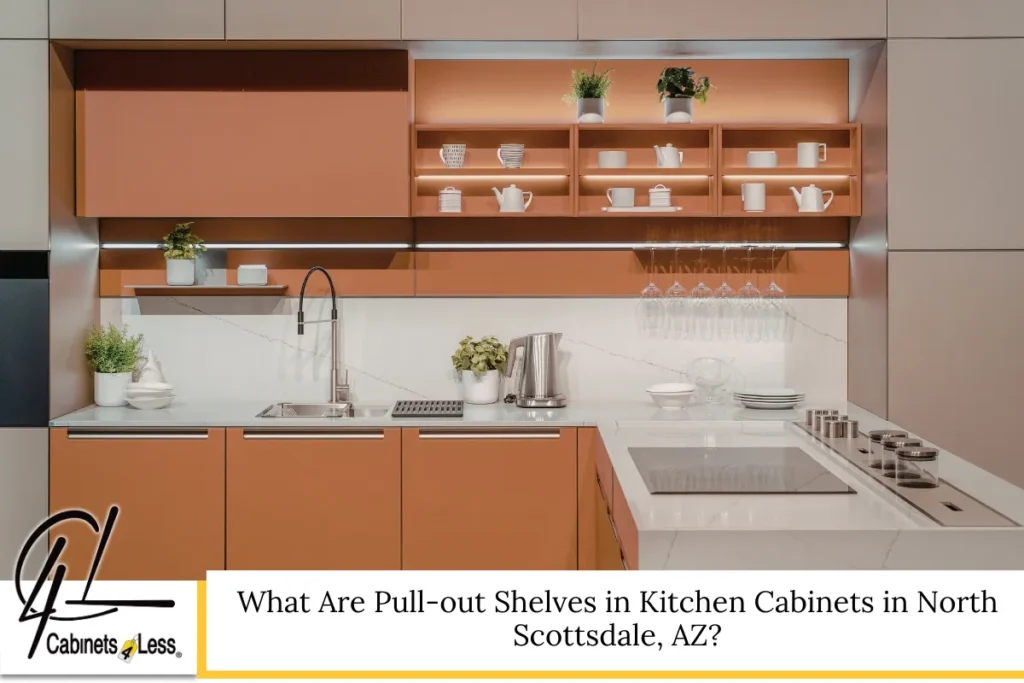
European style aesthetics favor continuous horizontal lines, minimalist fronts, integrated lighting beneath upper runs, and a furniture-like look that merges with the architecture. Flat surfaces and slab doors pair well with large-format tile, quartz or porcelain countertops, and linear hardware or no hardware at all. The minimalist aesthetic suits homes designed around open layouts and desert views.
American style aesthetics treat the cabinet fronts themselves as design features. Crown molding at the ceiling line, glass-front uppers, open shelving, and visible hardware all contribute to a layered, textured look. Traditional styles like raised panel doors and shaker doors work well with more traditional architectural details like wood-trimmed windows and paneled wainscoting.
Color and finish trends in the area reflect the landscape. Warm whites, sand tones, and light natural woods dominate American cabinetry selections. European cabinets often feature high-gloss laminates or matte finishes in taupe, soft gray, matte black, and textured wood-look surfaces. High-quality finishes are crucial for both cabinet types, especially under intense sunlight in Scottsdale, where UV exposure can fade or degrade lesser materials.
Many homeowners take a hybrid approach, combining a clean European kitchen layout on the base run and island with more traditional elements on the perimeter, like shaker doors on upper cabinets or decorative panels on a vent hood.
Storage, Organization, and Day-to-Day Functionality
How a kitchen actually works on a Tuesday evening matters more than how it photographs. Cabinet style directly affects storage capacity, workflow, and daily organization.
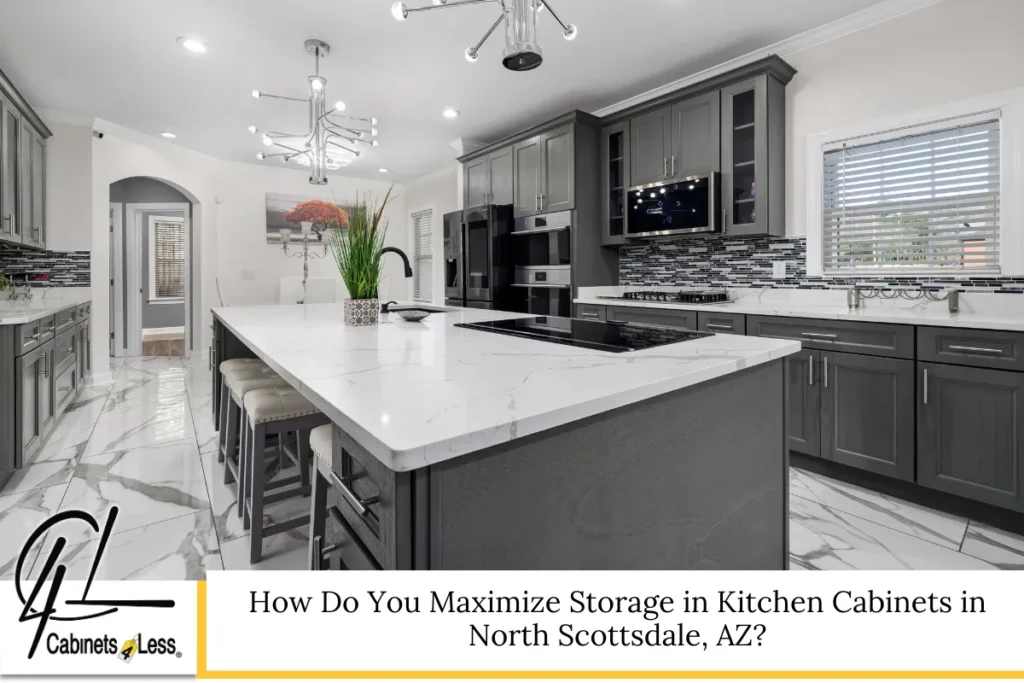
European cabinets are typically frameless, maximizing storage space by eliminating the frame that would otherwise narrow drawer and shelf openings. European frameless cabinets are compatible with wide pull-out shelves, internal drawer systems, corner carousel units, and tall pantry fittings that make every inch count. Industry comparisons suggest frameless boxes can provide roughly 25 to 30 percent more usable interior volume in the same overall footprint. European cabinets are frameless, maximizing usable storage space, which is especially noticeable in smaller kitchens like casita or guest house setups common across North Scottsdale properties.
American cabinets use a face frame, reducing interior storage compared to an equivalent frameless box, but this does not make them impractical. Deeper wall cabinets in some American lines, flexible use of open shelving, and appliance garages help compensate. Many cooks prefer the familiar arrangement of frame cabinets with dedicated zones for specific tools and supplies.
Practical features that work well in both systems include:
- Spice pull-outs and narrow tray dividers
- Waste and recycling pull-outs built into base cabinets
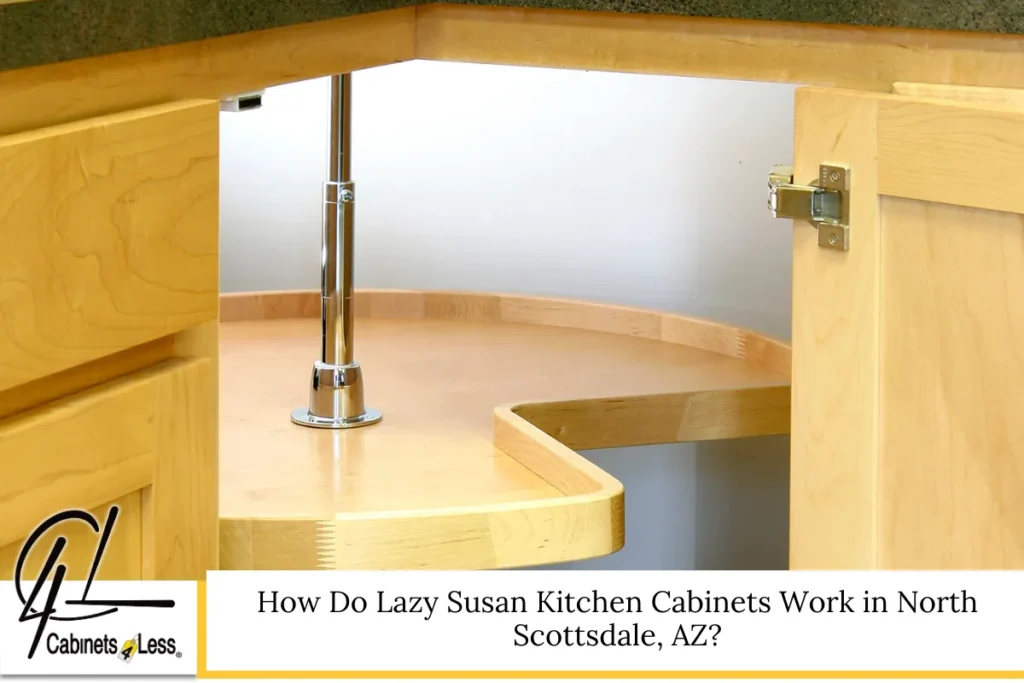
- Corner solutions like swing-out trays or blind-corner pull-outs
- Full-extension drawer slides with soft-close mechanisms
- Drawer organizers for utensils, knives, and baking supplies
For a large family kitchen with a walk-in pantry, framed cabinetry outfitted with quality hardware can be just as highly functional as a frameless system. For compact spaces where every inch of storage matters, European frameless construction has a measurable edge.
Cost, Value, and Resale Considerations in North Scottsdale, AZ
Both European and American cabinets are available across multiple price tiers, from value-conscious stock lines to fully custom luxury options. Total cost depends on materials, level of customization, hardware quality, and finish complexity.
European kitchens are often more expensive due to high-end materials, precision hardware, and specialized finishes. European cabinets often require longer lead times for custom manufacturing, particularly when ordering imported components or unique door profiles. However, some domestically produced European style lines are competitively priced with mid-range American cabinetry.
American kitchens offer modular cabinetry at various price points, and standard cabinets are typically more budget-friendly upfront, especially when homeowners stay close to stock sizes and popular finishes. Face frame cabinets in semi-custom lines can deliver strong visual impact without the premium of a fully custom European system.
Resale dynamics in North Scottsdale depend on the property type. Buyers shopping for new construction in desert contemporary communities generally expect sleek European kitchen design with integrated appliances and continuous surfaces. Buyers in established neighborhoods with more traditional styles often appreciate classic framed cabinetry with warm wood tones and detailed door profiles.
Long term value comes down to substance more than style labels. Durable materials, high-quality drawer slides and hinges, UV-stable finishes, and timeless color choices typically deliver stronger returns than choosing one cabinet style over the other. The final product should feel intentional and well-matched to the home.
Matching Cabinet Style to Your North Scottsdale Lifestyle
Lifestyle, household size, and cooking habits often determine which direction makes the most sense.
European kitchens tend to excel for homeowners who prefer a minimalist aesthetic, busy professionals wanting low-maintenance surfaces, or owners working with compact floor plans where every drawer opening counts. The sleek appearance and handleless fronts reduce visual clutter and simplify cleaning.
American kitchens may be ideal for larger families who want a warm, inviting space for gatherings, cooks who love a classic feel, or homeowners looking to echo traditional craftsmanship found elsewhere in their home. More traditional styles also pair naturally with existing trim, casings, and millwork in older properties.
A simple decision framework:
- Rank your priorities: style preference, storage needs, budget, and resale plans
- Consider your home’s architectural language and neighborhood context
- Think about daily use patterns and how long you plan to stay
Choosing cabinet materials suitable for Scottsdale’s climate is important to prevent warping and degradation. Engineered woods and UV-stable finishes tend to perform better than unprotected solid woods in the dry desert heat. A well-planned mix, such as European frameless base cabinets with more traditional upper cabinets, can bridge differences when household members have contrasting tastes.
Working with a Cabinet Showroom or Cabinet Shop in North Scottsdale
Visiting a cabinet showroom is one of the most effective ways to understand the real differences between European and American kitchen cabinets. Photographs flatten depth, texture, and color. Standing in front of actual door samples, opening drawers, and feeling the weight of different hardware systems tells you far more than any screen can.
What to bring to your appointment:
- Rough kitchen measurements (length of walls, ceiling height, window and door locations)
- Inspiration photos showing layouts, finishes, and details you like
- Notes on appliances you plan to keep or purchase
- A realistic budget range
A good cabinet store can provide design guidance, 3D renderings that show your kitchen from multiple angles, clear pricing comparisons between styles, and advice on coordinating countertops, hardware, and backsplashes. They can also walk through local building requirements around ventilation clearances, appliance depth, and anchoring standards so your chosen layout can be executed safely.
Schedule a design consultation early in the remodel process. Confirming lead times, especially for European style frameless lines, avoids last-minute layout changes and keeps your project on track.
Bringing It All Together: Choosing the Right Cabinet Style for Your Home
The main difference between European and American kitchen cabinets comes down to construction, visual language, and how space is used inside each box. European frameless cabinets deliver maximum storage access and a contemporary look. American face frame cabinets offer architectural warmth, familiar proportions, and easier adaptation to imperfect conditions.
The key decision factors remain consistent: do you prefer a modern or traditional look, how much storage do you need, what is your budget tier, and how long do you plan to stay in the home? Many of the most striking kitchens in North Scottsdale use a thoughtful blend of European and American influences rather than committing entirely to one system.
Before making a final decision, consult with a dedicated cabinet showroom, review real project photos, and compare samples under your home’s actual lighting. The best kitchen is the one designed around how you actually live, one that functions beautifully, respects local requirements, and reflects your personal style.
Kitchen Cabinets in North Scottsdale, AZ – C4L Cabinetry
We are C4L Cabinetry, a dedicated cabinet store and showroom located in North Scottsdale, Arizona, and we also service the prominent surrounding areas. Our showroom features high-quality kitchen cabinets in both European style frameless options and American style framed collections that you can see, touch, and compare side by side.
We guide our clients through every detail: door styles, finishes, hardware, and storage solutions tailored to how you actually use your space. If you need installation, we can refer you to experienced professionals we trust, though we are a cabinetry showroom, not an installation contractor.
Our team regularly helps North Scottsdale homeowners compare European and American cabinet systems for remodels and new construction projects. Whether you are building from the ground up or refreshing an existing kitchen, we are here to help you find the right fit.
Call us at (480) 590-1928 or fill out our contact form to schedule a design consultation and start planning the kitchen you have been envisioning.
Frequently Asked Questions
Do European Frameless Cabinets Work Well with Open Shelving?
Frameless cabinets pair nicely with floating shelves or open display sections, and many European systems include open shelf modules as part of their standard lineup. The key is proper wall blocking behind the shelving location, especially in homes with steel stud framing or lightweight drywall. Using brackets rated for the weight you plan to store prevents sagging over time. Visually, keeping shelf depth consistent with the cabinetry depth creates a cohesive line. Matching the shelf material or finish to adjacent cabinet fronts ties the design together. Open shelving works best for items used daily, while less-used pieces stay behind closed doors.
Are European Kitchen Cabinets Harder to Adjust or Repair Than Framed Cabinets?
Modern European hinges actually offer easy three-way adjustment, allowing you to fine-tune door alignment vertically, horizontally, and in depth with just a screwdriver. Replacement hinges and drawer slides are widely available from major hardware suppliers, though sourcing the exact brand match matters for consistency. Framed cabinets also allow hinge adjustment, but the process differs depending on whether surface-mount or concealed hinges were used. Both systems can be serviced by a skilled cabinet professional. The most important factor for long-term serviceability is choosing quality hardware from a reputable manufacturer at the outset, regardless of whether the cabinet is framed or frameless.
Which Cabinet Style Is Better for Aging in Place in North Scottsdale?
European frameless cabinets offer wider drawer openings and accommodate full-extension pull-out shelves more easily, which reduces the need to bend or reach deep into dark corners. These features support universal design principles that make kitchens safer and more comfortable as mobility changes. However, framed cabinets can also be outfitted with quality pull-outs, soft-close hardware, and well-placed task lighting. The familiarity of traditional handle placement can be an advantage for some users who rely on gripping cabinet pulls for stability. Regardless of style, prioritizing lower storage in drawers rather than behind doors, wider aisles, and good under-cabinet lighting makes the biggest difference for long-term livability.
Can I Mix European and American Cabinet Styles in One Kitchen?
Absolutely. Many North Scottsdale homeowners install a sleek slab-front island using European frameless construction while keeping more traditional shaker doors or raised panel doors on the perimeter wall run. The key to a cohesive result is matching finish tones across both systems, using consistent hardware finishes like brushed bronze or matte black throughout, and maintaining a unified color palette. A skilled designer can balance proportions so the two styles complement rather than compete. This blended approach is especially popular in transitional homes where the architecture bridges modern and classic elements, giving homeowners the best of both worlds.
How Long Do Quality Kitchen Cabinets Typically Last?
Well-built cabinets of either style can last 20 years or more with proper care. The factors that most influence lifespan are hardware quality, material selection, finish durability, and everyday use habits. In North Scottsdale, where dry heat and intense sunlight are constant, UV-stable finishes and moisture-resistant substrates hold up significantly better than untreated solid wood or budget laminates. Soft-close hinges and drawer slides reduce wear on the cabinet box over time. Regular cleaning with non-abrasive products and promptly addressing any water exposure around sinks or dishwashers will extend the life of any cabinetry investment, whether it is European or American in construction.
Disclaimer: This article is for general informational purposes only and does not constitute legal, building code, or design advice. Homeowners should verify specific requirements and conditions with qualified local professionals in North Scottsdale, Arizona before making cabinetry decisions.
Read How to Replace Bathroom Cabinets Without Wall Damage: Advice for Homeowners in North Scottsdale, AZ